

This is the fourth in a six-part series of posts about online/mobile marketplaces brought to you by rageandrelease.com and our content partner Balanced. Read parts one, two, and three.
Fraudsters Gonna Fraud
Fraudsters armed with stolen credit card numbers want nothing more than to turn those numbers into cash. Many will buy highly desirable items (e.g. iPads) from eCommerce sites and resell them elsewhere. But you know what’s cooler than stealing someone else’s money? Stealing someone else’s money without all the work of buying and reselling an item. This is why marketplaces with payments functionality are lightning rods for fraudsters with stolen credit cards. A savvy fraudster will head over to their nearest marketplace, create a buyer account, create a seller account, and just like that they have an instant, virtual terminal that turns stolen credit cards into cash.
“Marketplaces with payments functionality are lightning rods for fraudsters with stolen credit cards”
Low-Friction Marketplace, Low-Friction Fraud
Many of the marketplace operators I interact with speak enthusiastically about how few steps their platform requires for a seller to post and sell an item. They consider the “low-friction” nature of their marketplace a competitive differentiator. They’re certainly not wrong. In many ways, the job of a successful marketplace is to create as little friction as possible between listing inventory and selling it, but some friction is a good thing as long as it doesn’t drive away good users. Too little friction can attract the wrong type of users: fraudsters. In this post I’ll attempt to layout my philosophy for building a marketplace that thwarts the efforts of fraudsters while maintaining a pleasant experience for good users.
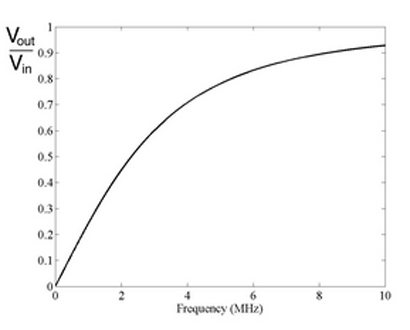
Circuit frequency response of a passive high-pass filter
High-Pass Filters
I have a degree in electrical engineering, so please excuse the fact that I often think in terms of signal processing. A high-pass filter (HPF) is an electronic filter that allows high-frequency signals to pass through untouched, but reduces the strength of signals of lower frequencies. Fraudsters are the low frequency signals, while normal buyers and sellers are the high frequency signals. I believe that one of the most effective ways to prevent the type of fraud described above is a series of HPFs that when applied to a marketplace allow normal (i.e. non-fraudy) buyers and sellers to operate as usual, but create barriers that fraudsters either 1) find unattractive or 2) increase the likelihood they will be caught, effectively filtering them out of your marketplace. Another way I’ve described these HPFs are as “passive anti-fraud mechanisms.” Your job as a marketplace operator is not to reduce friction for all of the users on your platform, just the non-fraudy ones.
What You Know vs. What You Are
Imagine a marketplace, similar to eBay, that allows buyers and sellers to exchange items like handbags and shoes. Now imagine a fraudster posing as a buyer, “buying” a purse with a stolen credit card, and receiving cash out the other side as a merchant, but never actually shipping an item. One might suggest asking the seller for more information (e.g. a full tax ID number (TIN)) about him/herself to verify their identity. While I fully recommend identifying sellers for compliance reasons, asking for a full TIN may be considered invasive by some normal users (the high-frequency ones) that simply don’t want to provide that information. More importantly, asking for more information may not be that effective in preventing fraud. A fraudster with the ability to acquire credit card information that is not their own can also likely acquire personally identifying information about others. Remember, security generally comes from three factors:
What someone knows
What someone has
What someone is
Often the most effective security factor is verifying what someone is – a state of being.
High-Pass Filters In The Wild
Using the HPF approach to fraud fighting, I would recommend making the buyer and seller go through a series of steps that will be trivial for them to complete in the case that they are actually shipping and receiving a real item. For example, require the seller to provide a tracking code supplied by a major shipping company. Use that shipping company’s API to track the package to understand when the item is shipped, when it’s delivered to the buyer, and how much the package weighs. By doing so, you’ll require any potential fraudster to actually go through the steps of simulating a real shipment. For many fraudsters (but not all), this will be more work that it’s worth. For others, it will increase the chances of them doing something that will distinctly standout from normal transactions. For example, maybe you know that a handbag of a certain type will weigh two pounds, but the package shipped by the fraudster only weighs half a pound; someone who is actually shipping an item will likely not make this mistake, but a fraudster might.
“Line up enough of these HPFs in a row and you can start filtering out a serious amount of fraud from your marketplace.”
By following the steps above, the operator of this hypothetical marketplace creates a situation where the work required to simulate actually shipping an item is either too much work for them, or will increase the chances they make a mistake while attempting to simulate a real transaction, thus making the fraud easier to detect. Normal buyers won’t even know they’re passing through a filter. Line up enough of these HPFs in a row and you can start filtering out a serious amount of fraud from your marketplace.
If you have specific questions about fraud on your marketplace I’d be happy to offer my advice. Please contact me on Twitter (@jkwade) or via email (jkwade+collcons at balancedpayments.com). Also, feel free to follow @Balanced on Twitter, where we often post links about marketplace fraud.
Pay it forward,
Jareau
Further Reading: If you’re interested in specific fraud detection techniques, I highly recommend reading “Death, Taxes, and Chargebacks” by my former colleague, Ganesh Venkataraman and “Five Fun Fraud Facts” by Steve Lambe, previously of Sift Science. Also, check out this talk by friend of Balanced, Ohad Samet, who literally wrote the book on Online Payments Risk Management.
 Jareau Wade is co-founder and VP Growth at Balanced, a payments API for online and mobile marketplaces (available in the US only for now). Previously, he was the 1st employee and head of data acquisition at Milo.com until it was acquired by eBay in late 2010. Before Milo, Jareau was a founding faculty member at an Accra, Ghana-based technology-entrepreneurship training institute called MEST.