
 “How long will it take to integrate Balanced into my marketplace?” I’m often asked this question by marketplace operators (usually engineers) evaluating my company’s payments API. I think it’s a very important question, but one I’m much less qualified to answer than the engineers themselves. Between Balanced’s primary integration points – 1) accepting credit card payments from buyers and 2) sending ACH payouts to merchants – lies the code that represents all the decisions the marketplace operator has made about how their marketplace will work – something they know much better than do I. The specifics of how each marketplace should work are unique, but I have noticed some best practices for operating an online/mobile marketplace after you’ve cracked the elusive chicken and egg user acquisition problem. I share these best practices below.
Control Your Bazaar
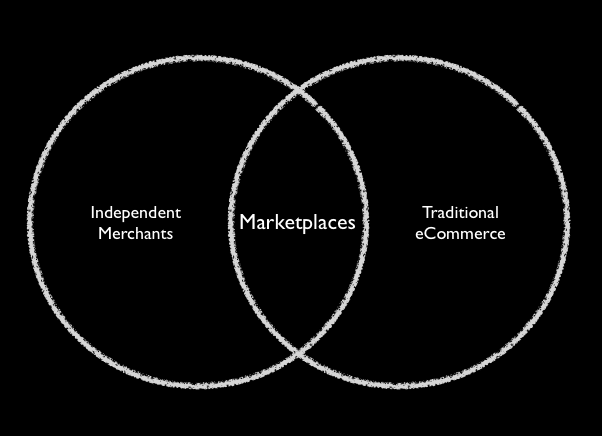
Marketplaces are special. They allow buyers to find unique or previously inaccessible inventory from merchants in a way that traditional eCommerce companies don’t, but traditional eCommerce companies, like Amazon, have raised customer experience expectations so high that it’s often not enough to just compete with unique products and services. The buyer’s discovery, checkout, and fulfillment experiences must be world-class. As a result, many successful marketplaces have decided to move away from the open, bazaar model (e.g. Craigslist and eBay, circa 2000) and have instead begun to curate and control their marketplaces. The goal is to have a buyer’s experience on a marketplace be just as good as a traditional eCommerce merchant’s while offering the unique inventory only marketplaces can. Controlled marketplaces make product and policy decisions that create positive second-order effects, which lead to a better shopping experience for the buyer and less friction for the merchant.
“Marketplaces need to be responsible for the experience on their site.”
Perhaps the most famous example of a marketplace becoming a controlled bazaar is eBay. I’ve personally heard Todd Lutwak, former VP of Selling at eBay, opine: “I absolutely think marketplaces need to be responsible for the experience on their site.” After they acquired PayPal, eBay experimented with policy and product changes to catalyze sales. They understood that many buyers trusted the combined brands of eBay and PayPal but had little trust for the merchant actually selling the item, so eBay initiated ‘PayPal Purchase Protection,’ a policy that lowered the trust barrier for a buyer to purchase from a merchant they hadn’t done business with before. When more merchants made sales, their ratings improved, and the likelihood of another buyer purchasing from them in the future increased. It was a virtuous cycle, a positive second-order effect of changing their buyer protection policy.
Give Merchants a Clear Road
A marketplace is invaluable to its merchants if it controls its bazaar to the point where it becomes greater than the sum of its independent merchants. But a marketplace is nothing without its merchants – they have inventory the marketplace doesn’t. In this way, marketplaces and merchants are co-dependent. They’re also very often at odds. It’s the responsibility of a successful marketplace to optimize the overall buying experience on their platform, while the goal of a successful merchant is to sell as much as possible. These goals don’t always align. To manage this disconnect, many successful marketplaces have devised a penalty/incentive system for their merchants.
“Strict and consistent policy enforcement is always better than lenient policies that are opaque.”
I won’t spend time explaining specific incentives and penalties I’ve seen employed. The important part is the consistency with which these policies are enforced. Merchants want a clear road. They want to know where exactly on the reward/penalty scale they are. Otherwise, their confidence in selling on a particular marketplace is diminished. Strict and consistent policy enforcement is always better than lenient policies that are opaque. The only caveat is that sometimes unexpected rewards or gifts are more powerful than planned rewards.
If you have specific questions about your marketplace, I’d be happy to offer my advice. Please contact me on Twitter (@jkwade) or via email (jkwade+collcons at balancedpayments.com). Special thanks to Todd Lutwak of Andreessen Horowitz for sharing his thoughts on managing marketplaces at Balanced HQ earlier this year. Many of the seeds for this post were sown that evening in April during Todd’s talk.
Pay it forward,
Jareau
This is the third in a six-part series of posts about online/mobile marketplaces brought to you by rageandrelease.com and our content partner Balanced. Read parts one and two.

 Jareau Wade is co-founder and VP Growth at Balanced, a payments API for online and mobile marketplaces (available in the US only for now). Previously, he was the 1st employee and head of data acquisition at Milo.com until it was acquired by eBay in late 2010. Before Milo, Jareau was a founding faculty member at an Accra, Ghana-based technology-entrepreneurship training institute called MEST.