
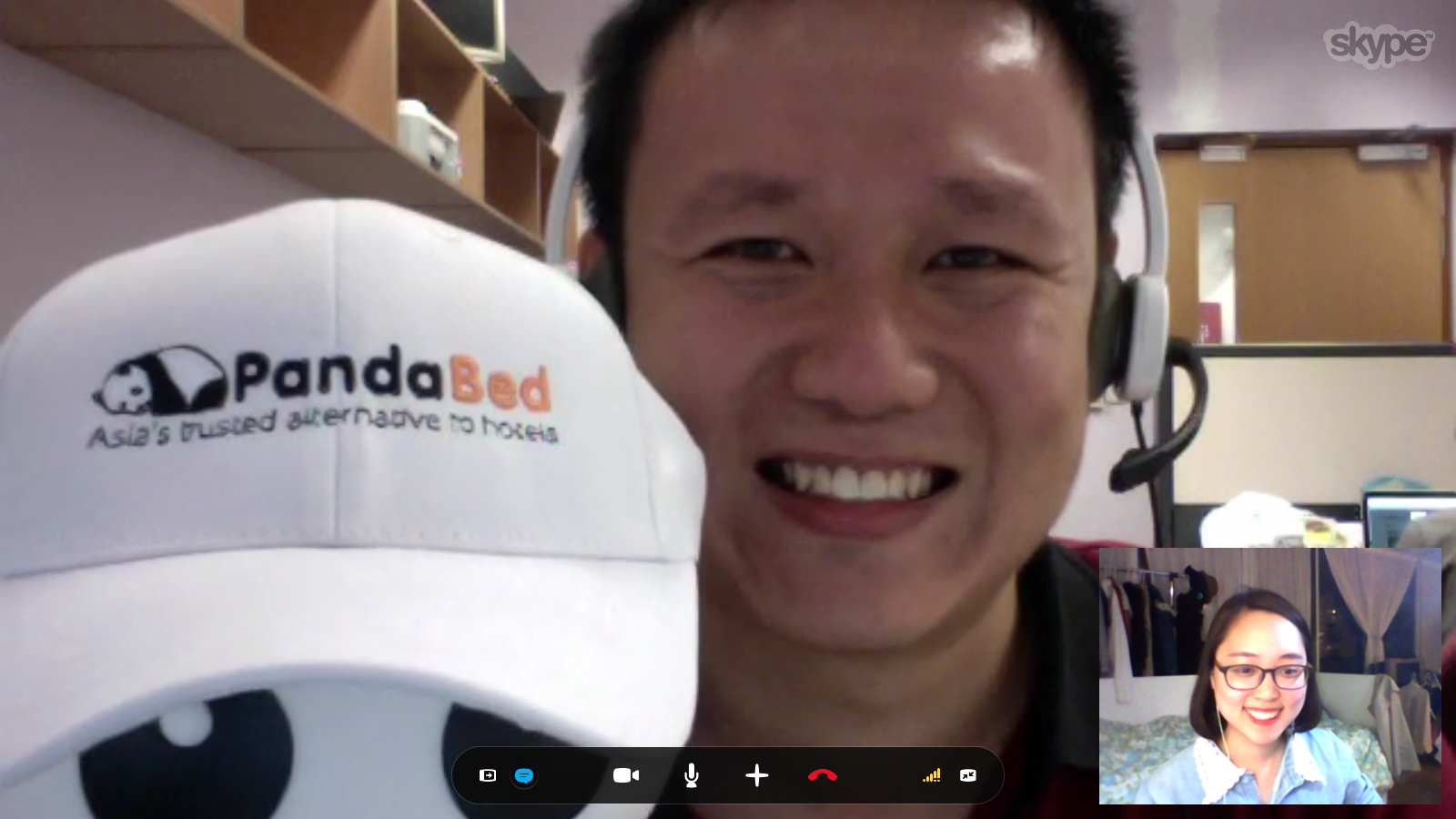
 Lester Kang is the co-founder of PandaBed (with James Chua) a home sharing marketplace platform that focuses on the Asian region. In this interview Lester shares with Diane Jung, our curator for Asia how PandaBed convinces the culturally conservative Asian market to share its homes.
How did you come up with the name PandaBed?
The name PandaBed came from the characteristics of pandas: they are originally from Asia; they know the best place to sleep; and they are trust-worthy animals since they were historically presented as a symbol of peace and friendship. Our mission is to “offer the safest and most comfortable alternative-accommodations in Asia” through connecting like-minded homeowners and travelers.
 Please describe what PandaBed offers.
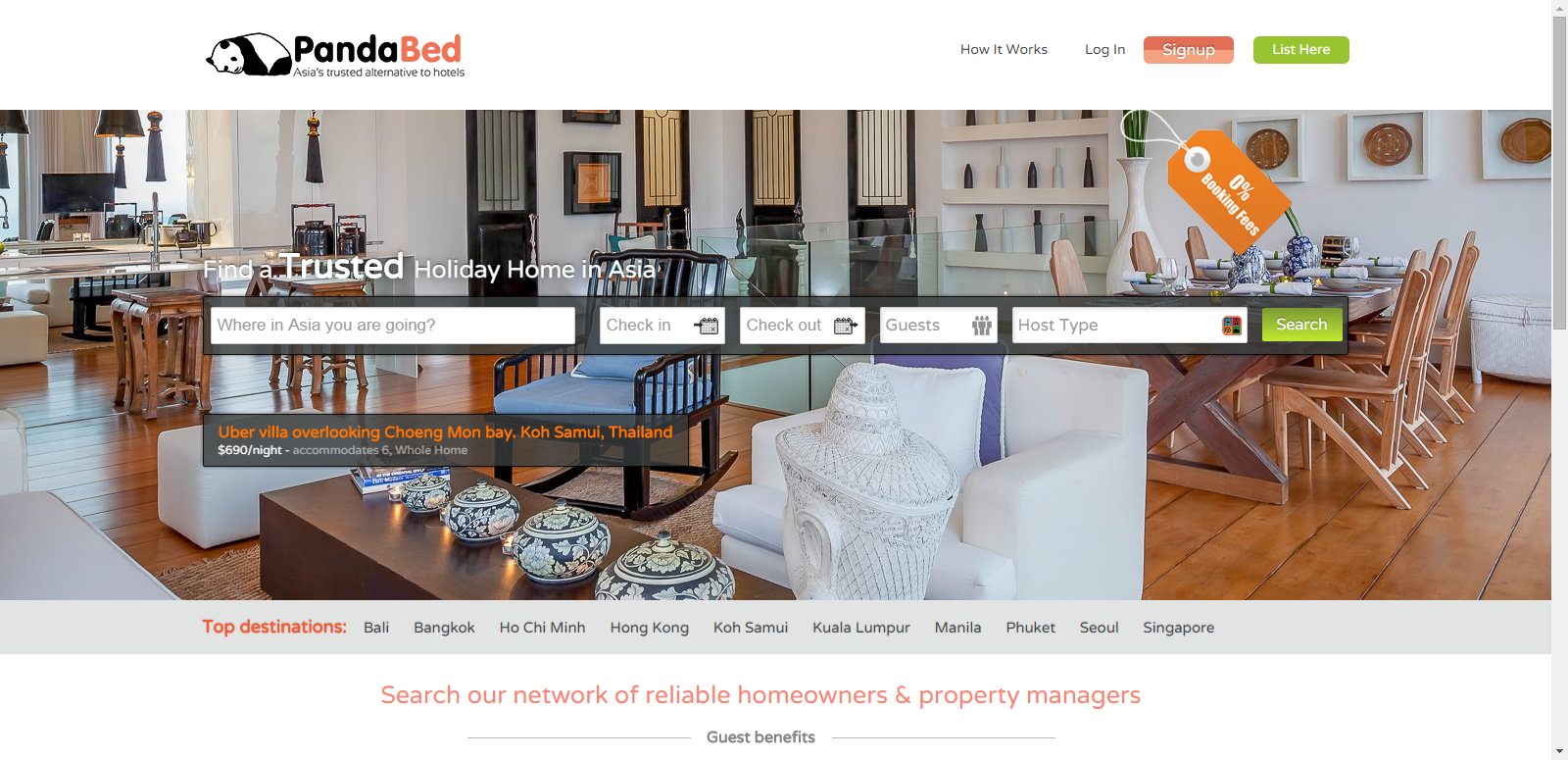
PandaBed is a trustworthy holiday home rental marketplace optimized for Asian homeowners and travelers coming to Asia. Asian homeowners and travelers have their unique preferences (such as similarity in cultural background) when it comes to home sharing and holiday rentals and PandaBed provides platform for the community to book or rent out their holidays for short stay.
What made you start PandaBed? Any philosophy or motivation behind it?
Lester and James, university friends, traveled around different continents together, and had the idea of bringing the concept of bed and breakfast to Asia. After spending time working and Singapore and traveling Asian countries, they discovered a great potential in Asian BnB market and decided to quit their corporate careers—and finally, they launched PandaBed in December of 2013.
The pair is also very passionate and huge advocates of the collaborative consumption movement. They truly believe that the growth of the sharing economy will be huge as existing internet technologies enable consumers to bypass traditional business models and purchase directly from another peer.
Read more about the PandaBed launching story on the website (https://pandabed.com/our-story).
What makes PandaBed different from its competitors?
Number 1, PeerMatch allows homeowners to indicate their guest preferences using 1) four major religions in Asia, 2) nationality and 3) age group. Likewise, the PandaBed guest can book a home that is hosted by an owner of similar cultural background. For example, Muslim travelers can now stay in a Muslim-friendly home that has a halal kitchen on PandaBed.
When it comes to letting a stranger in your house, Asian homeowners are much more conservative than Western homeowners. They want someone who has a similar cultural background, therefore, shares things in common with them. PeerMatch finds two people with similar interests in crucial things such as religion, and as a result, the feeling of relation from meeting with someone similar to you lessens the guard of the conservative minds. It is like BnB-meets-Match.com methodology.
Number two, Our fees. We charge 0% to the guest when booking (10% to the owners) while most of our peers charges 10% to their guests. We believe that guest shouldn’t be made to pay additional booking fees.
Number three, We are still focusing on P2P in Asia in a big way. Most of our peers have given up on P2P, because they feel like Asians don’t want to share, or Asians are too scared. We think sharing is in our blood as Asians, but we need the right nudge to do it.
Are you worried that the PeerMatch system can be perceived as discriminatory?
We see it as a way to ‘dip the sharers toe in the water’. Once they feel okay, they realize the benefits of sharing economy socially and monetarily.
What are some interesting host stories?
A heartfelt story was when James met a retired elderly lady homeowner who lives by herself with in a big house where all her children has moved out. She complained that she hardly gets any visitors and was thinking to downsize her home due to the increasing expenses to maintain the home but was also unwilling to as she had many fond memories raising her kids in the home.
When we shared with her PandaBed offer flexibility in rental duration, like all first time host, she was unwilling and reluctant to have stranger living in her home. When we probe further, she candidly shared that she preferred that she hosted someone who is a Christian and more mature person. We immediately setup her guest preferences and since then she has hosted over 100 nights on PandaBed. Since then she shared with us that she was able to use the earnings from PandaBed to partially support her retirement and not have to downsize to a small house.
A story one of our Malaysian host shared was that they had a group of family comprising 3 generations of that booked her homestay in Kuala Lumpur. When the taxi arrived at the homestay doorstep, the grandparents thinking they were going to stay in a hotel refused to enter and insisted that they switched to a hotel. After much persuasion by the younger generation, the grandparents agreed to give the homestay a try. When the host visited the family a few days into their stay, I was told that the grandparents profusely thanked the host for providing such a wonderful home and that their family had a great time bonding with one another in a homey environment.
Diane’s comment: These stories are not only PandaBed’s success stories, but examples of sharing economy’s success stories in Asia. PandaBed’s approach is adapting sharing culture to urbanized modern Asian society.
What is the biggest challenge that Pandabed should overcome now?
Whilst the dominant Airbnb is gaining a lot of media attention and traction in Asia, we feel that Asia is still very conservative and fear in staying with a stranger’s homes. Our biggest challenge is to associate the word “TRUST” to home sharing. Hence we find that by pairing Asian host and guest base on similar cultural and social preferences would be the key to unlocking supply and demand in Asia.
PandaBed by the numbers:
-PandaBed offers accommodation in 9 Asian cities: Bali, Bangkok, Hong Kong, Koh Samui, Kuala Lumpur, Manila, Phuket, Seoul and Singapore.
-There are 5000 listings on the platform, and this number is expected to double when the platform becomes present in China, Japan, India and Taiwan

Appreciation to my father who told me on the topic of this webpage, this web site is truly remarkable.
Hiya very cool website!! Man .. Excellent .. Superb ..
I will bookmark your web site and take the feeds also?
I’m satisfied to seek out a lot of useful
information right here in the publish, we need develop extra techniques in this regard, thank
you for sharing. . . . . .