 KissKissBankBank is a crowdfunding platform that fosters connections between projects creators and potential contributors passionate about creativity.
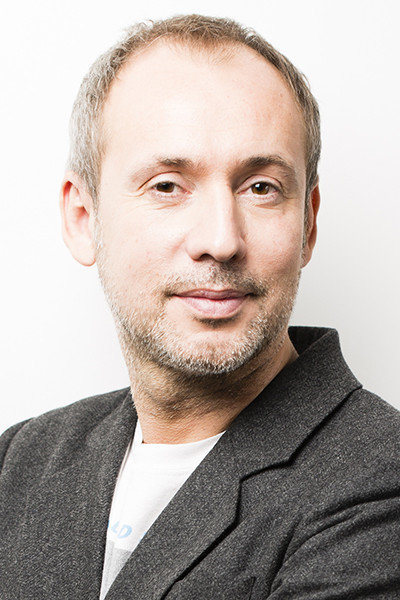
Belgian Curator Marco Torregrossa had a chat with Vincent to get the latest scoop about KissKissBankBank and what new developments are on sight, affecting the realm of collaborative finance.
We all have different interpretations of crowdfunding, what is – in short – the essence of KissKissBankBank?
For us the meaning of crowdfunding is to “unleash creativity”. To make sure everyone in the world has a fair chance to get his/her project financed by the crowd. This is our manifesto.
Peer to peer lending and crowdfunding are part of the wider collaborative economy movement where collaborative consumption also belongs, how do you see the relation between crowdfunding and collaborative consumption? What is the next industry/sector that will soon join the collaborative economy or which sector/industry will be disrupted next?
We have a lot of projects coming from the collaborative consumption sector and – in some ways – we see our platform to be in the middle between collaborative consumption and collaborative finance. The media in France call crowdfunding the “bank of collaborative consumption”.
When collaborative marketplaces are only in an emerging phase, they come on our platform to find finance for their prototyping and an impulse to scale.
In my opinion, the biggest disruption on sight is going to be in the education sector. The current top down system is not sustainable whereas education should be accessible all over the world. Both collaborative consumption and collaborative finance can help this to happen.
Why do you think crowdfunding has become so popular now as opposed to some years ago? What sets you apart from other crowdfunding platforms? Tell me about your proudest achievement.
There are two main drivers that allowed crowdfunding to surface in recent times. First is the internet and the growth of social networks. Through new digital tools we increased both the efficiency and the outreach of our platform, allowing more projects to easily reach the crowd and get higher chances to be financed. The second is the financial crisis that has acted as a sort of leverage and an accelerator for our business to grow.
In the book I wrote, I mentioned KissKissBankBank is different from the other crowdfunding sites because we are the only company in the world that by the end of 2014 will be working on all three segments of financing: peer to peer lending, rewards and equity funding. We already have a rewards based platform, we have a social peer to peer lending arm and this year we will launch a new segment where the crowd can invest equity or lending directly into French companies (crowd-lending). This means that we will be able to provide solutions and bring new tools in the market to make sure everyone can finance every kind and every size of project.
Would you define your platform as an enabler of entrepreneurship or of general economic growth? Do you think that some of these entrepreneurs that are using your platform would be successful without you?
With crowdfunding we are giving a chance to every kind of project to be realised. When you do that, you will change the traditional top down system that requires project developers to have a lot of money to access the market. In the long run this will revolutionise the way we look at mainstream finance. Instead of keeping money in the banks, which is creating every 20 years one economic crisis after the other, investors coming to our platform have an opportunity to boost entrepreneurs’ business and the economy at large.
In the short term, you could consider crowdfunding as contributing to small scale entrepreneurship, but in the longer term this will have a significant impact on macro-economic growth. On our platform, we mainly support micro entrepreneurs and small artisan projects, which is of course a huge part of our economy. In addition, with our new products that we will launch in the market this year, we will be in a position to contribute to the other part of the economy in greater scale.
I think we are at a turning point that will put the financial world upside down.
Crowdfunding isn’t without its share of criticism. The European Commission recently launched a stakeholder consultation on crowdfunding. Did you participate and how do you go about the regulatory problems at the horizon? For instance: fraud prevention, intellectual property rights, money laundering, misleading advertisements etc?
We are very much in contact with regulators in France, I am working almost on daily basis with them. At the European level we active as part of the European Crowdfunding Network (ECN).
The problem of regulation is they are heavily influenced by the traditional finance industry that tries to protect the status quo and fight everything else that exists besides banks. Their recurrent point is that the system should safeguard the lender and protect investments. This is on one hand acceptable but on the other hand it is a fictitious statement because everyone who comes to our platform as a lender, donator or investor knows right from the start that he/she incurs in some risks. It is an essential model in every collaborative consumption marketplaces to be aware of the risks in these types of transactions. The point is all about managing these risks properly. Our users know that projects may never deliver, it’s like in real life when you lend money to one of your friends and you know that the money may never come back to you. The only difference is that in the banking sector they make you believe you are investing without risks. I think regulations should stop to protect the traditional financial business, also considering the amount of credibility it lost nowadays.
On a crowdfunding platform, even if the project never gets funded and money is not returned to the investor, this will never create a large scale economic crisis.
The struggle for legitimacy for both peer lending and crowdfunding platforms seems over now. Where do you see KissKissBankBank going over the next five to ten years? Are there any projects that you’re really excited about right now? And what is the most ridiculous one you have ever stumbled upon?
5 years ago when we started our company, the idea to get into a crowdfunding business was ridiculous in itself, just because this sector did not exist at all. But as our band now strengthens, we are getting into the international market. We recently opened an office in Brussels and one of my colleague is flying tomorrow to Canada where we will probably open an office for the French part of the country by the end of this year.
At KissKissBankBank we receive a large amount of projects dealing with films, music and the arts. However, there is one project we are now featuring on our site that “stands out of the crowd”. It is called the Sea Orbiter. A guy is working with a team of 10 scientists on an ocean spaceship and has already collected 15.000 euro from our platform.

You’ve raised many iteretsning points in this article. I re-read it several times and was in the middle of drafting a response when my computer un-ceremonially shut down :(((I will try to scrape up what’s left in my fading memory bank.